
How to decide your website requirements?
5/18/20252 min read

Step 1: Define Your Goal
Ask yourself : Why do I want a website?
Examples:
To earn income,
Showcase skills,
Sell products,
Offer appointments,
Build a brand,
Blogging
Step 2: Identify Your Skills and Interests
List what you're good at or interested in:
Design, writing, coding, photography, coaching, marketing, blogging etc.
Step 3: Decide How You Want to Earn
Choose your income model:
Service-based (e.g., coaching, freelance)
Product-based (e.g., online store)
Affiliate marketing/content monetization
Bookings (e.g., appointments for salons, doctors)
Ads (e.g., blogs or news sites)
Step 4: Know Your Audience
Ask: Who am I helping?
Businesses (need services)
Customers (buy products)
Readers (blogs)
Local clients (need appointments)
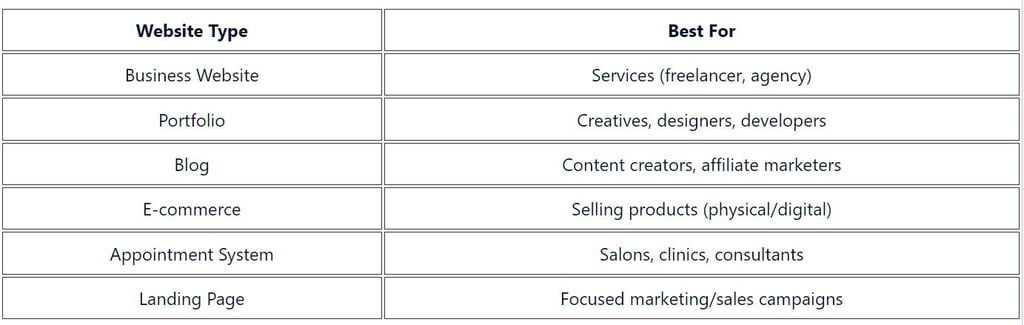
Step 5: Explore Popular Website Types
Here are types that fit your business goals:
Step 6: Match the Type to Your Goal
Example:
Want to offer design services? → Portfolio + Business website
Want to sell planners or merch? → E-commerce
Want to help people book your service? → Appointment-based
Step 7: Check Competitor Sites
Google others in your niche and analyze:
Design
Features
Content
Monetization methods
Step 8: Decide on Your Content Strategy
Ask: What will I show or sell?
Services, testimonials, blog posts, product images, contact forms, calendars
Step 9: Be Honest About Your Comfort with Tech
Ask yourself:
"Do I want to build the site myself, or do I want someone to build it for me?"
If you're tech-savvy or willing to learn:
You can try platforms like WordPress, Wix, or Shopify depending on your goal.If you don’t want to deal with tech at all:
It’s best to hire a professional who can recommend the right type of website, design it for you, and even manage it if needed.
Step 10: Choose the Website That Supports Your Growth
Ask: "Will this type of website grow with my business?"
Don’t just think about what you need today—think about where your business might be in 6–12 months.
Starting as a freelancer? → Make sure your site can later add a portfolio, blog, or pricing plans.
Selling a few products? → Pick a platform where you can later add more products, payment gateways, or shipping options.
Offering local services? → Ensure your site can eventually include reviews, online booking, or a gallery.